Which tree service do you need?
Most people call us knowing what is wrong with a tree but not what the job is called. Here is the plain-English version of each service, and the clues that point to it.
Tree lopping
Tree lopping takes size, weight or height off a tree that you want to keep. Typical reasons: limbs over the roof, leaves filling the gutters, branches scraping a shed, a canopy shading the whole yard, or a tree that has simply grown too big for the space. Good lopping cuts back to healthy side branches and collars instead of leaving stubs.
It is probably lopping if: the tree is healthy and the problem is a handful of limbs or the overall size.
Tree removal
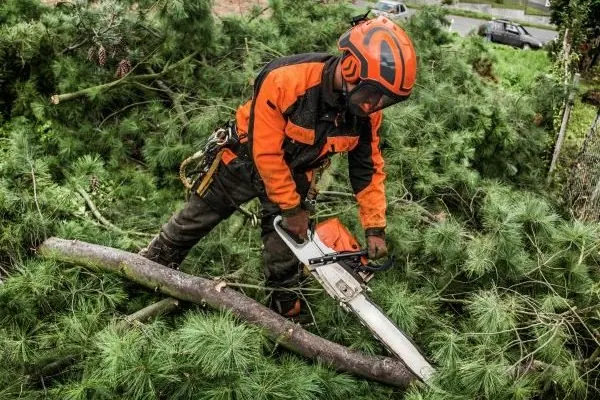
Tree removal takes the whole tree down, usually in sections from the top. Typical reasons: the tree is dead, splitting or leaning further each winter, its roots are damaging something that matters, or it is in the way of a building project. In the hills, slope and access decide how a removal is done.
It is probably removal if: the tree is dead or failing, or more than about a third of it would have to come off to fix the problem.
Stump grinding
Stump grinding turns a stump into chip below the ground surface so you can turf, mulch or plant over it. The deeper roots stay in the ground and rot away slowly.
It is probably grinding if: the stump is in a lawn or garden bed and nothing structural is going on top.
Stump removal
Stump removal digs or pulls the stump and its main roots out entirely, then backfills the hole. It is needed before slabs, sheds, pools, paving and retaining walls.
It is probably removal if: you are building on or right next to where the stump is.
Palm tree removal
Palm tree removal handles fan palms, date palms and queen palms. Palms are climbed or reached by platform, stripped of fronds, then taken down in short trunk sections. A palm clean, removing dead fronds and seed stalks, is a common alternative to removal.
It is probably palm work if: the tree has fronds rather than branches.
Bamboo removal
Bamboo removal cuts out the canes and, more importantly, the underground rhizomes that let bamboo spread. Running bamboo can travel under fences, lawns and paving.
It is probably bamboo work if: you have canes popping up away from the original clump.
How every job is quoted
Every job is quoted after someone has looked at the tree and the site. That is not a formality: in the hills, slope, access, overhead power, septic systems and what sits under the tree change the price and method more than the tree's size does. A good written quote names each tree and each task, says what happens to the stump, and states whether the wood, chip and green waste leave the property.
Our cost guide has 2026 planning ranges if you want a rough budget first.
Where we arrange work
Tree work is arranged across the City of Kalamunda: Kalamunda, Lesmurdie, Gooseberry Hill, Walliston, Bickley and Carmel in the hills, and Forrestfield, High Wycombe, Maida Vale and Wattle Grove on the foothills. There are local pages for Lesmurdie, Gooseberry Hill, Forrestfield and High Wycombe.
Combining jobs on one visit
Plenty of hills jobs involve more than one service. A removal is often followed by stump grinding. Lopping one gum over the roof can be combined with deadwooding the one over the driveway. A bamboo screen might come out on the same day as an old palm beside it. Setting up on a sloping block takes time, so grouping work into one visit usually makes sense. Ask for each task to be listed separately on the quote so you can see where the money goes and drop anything that can wait.
A word on who does the work
This website is a referral service. The work itself is done by independent local tree contractors. We ask them to hold the licences and insurance the job needs; ask to see them before work starts, and check that the quote is in writing. Read the disclaimer for the full arrangement.