What tree lopping means in the hills
Tree lopping in Kalamunda is about making a tree fit the block it is on. The common jobs are shortening long limbs that reach over the house, lowering a tree that has become too tall for the space, lifting the lower canopy off a driveway or shed, and thinning a crown so wind passes through it rather than pushing against it.
A good lopper does this by cutting back to points where the tree can cope with the wound: the collar at the base of a branch, or a healthy side branch big enough to take over as the new end. Bad lopping, sometimes called "topping", chops limbs off at whatever length is convenient and leaves stubs. Those stubs rot back into the tree, and the tree answers with a thicket of fast, weakly attached sprouts that become the next hazard. On a jarrah or marri over a roof, that is the opposite of what you want.
Jobs we arrange most often
Clearance over roofs and gutters. Eucalypts drop leaves, bark and twigs all year. Branches resting on or just above a roof fill gutters, scrape tiles and give embers a path to the house in a fire. Cutting them back to give a few metres of clearance is the most common hills lopping job.
Height and spread reduction. A tree planted as a seedling thirty years ago may now be taller than the house is wide. Reducing it by shortening the leading limbs to lower side branches keeps a natural shape at a smaller size.
Canopy lifting. Removing the lowest limbs lets light into the garden, clears headroom over paths and driveways, and lifts fuel off the ground before summer.
Deadwooding. Dead limbs in a gum are a hazard, especially over driveways, play areas and parking spots. Removing them is quick work for a climber and one of the best-value jobs you can book.
Fire-season preparation. Ahead of each summer the City of Kalamunda publishes what owners in the hills must do to reduce fire hazards. Lopping overhanging limbs, separating canopies from buildings and clearing low branches all help; check the current City notice for the specifics on your lot.
Why access shapes the method
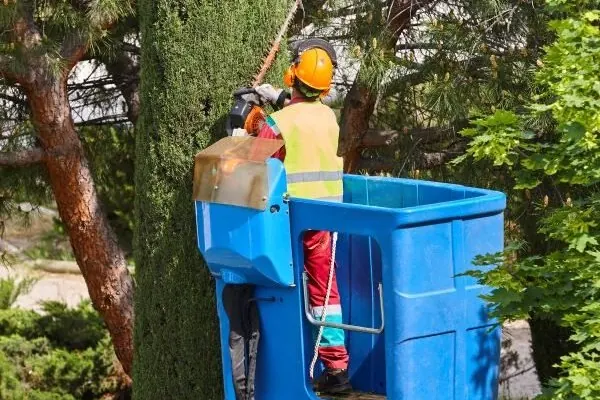
On a steep Lesmurdie or Gooseberry Hill block, the question is not just how to cut the limb but where it goes next. A climber may rig each section on a rope through a high anchor point so it can be lowered slowly and landed between garden beds, fences and retaining walls. Sometimes an elevated work platform can reach from the driveway or the street and save a lot of climbing; sometimes the slope rules it out. Material then has to be carried up to a chipper or trailer, which is often the slowest part of the day.
None of that is visible from a photo, which is why a contractor needs to walk the block before giving a firm price.
Native trees, hollows and wildlife
Big old jarrah and marri are valuable habitat. Black cockatoos feed on marri nuts and jarrah seed, and hollows in older trees are used by parrots, possums and bats. A good contractor checks the tree before cutting and holds off if something is nesting in a limb that is due to come off. Pruning rather than removing is often the way to keep a mature native tree on the block safely.
Hills trees that need care
Marri canker and Phytophthora dieback both show up in the City of Kalamunda. A tree with active canker or crown decline may need a different plan from a healthy one, and soil-borne dieback can be spread on boots and machinery. Read our guides on marri canker and dieback before you book work on a declining tree.
Lopping or removal?
If more than about a third of a tree would have to come off to make it safe or to fit the space, removal and replanting with something better suited is often the more honest answer. Lopping is the right call when the tree is basically healthy and the problem is a handful of limbs. The contractor should explain which way they lean and why. If removal is the answer, see tree removal.