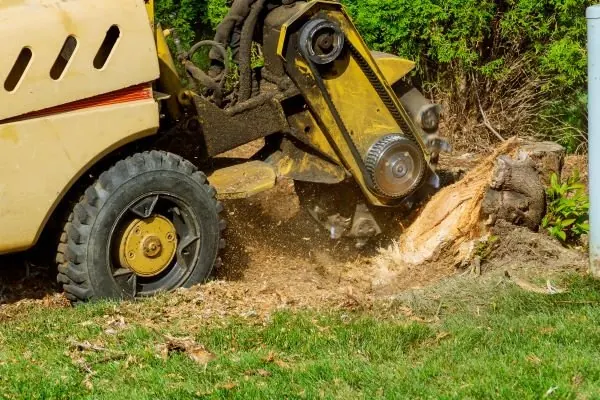
What a stump grinder does
A stump grinder is a heavy, toothed cutting wheel on a machine that the operator swings back and forth across the stump, lowering it a little with each pass. The stump is chewed into a mix of wood chip and soil until it is below the surface, and the main surface roots running away from it are followed and ground out to an agreed distance.
What grinding does not do is pull the root plate out of the ground. Deeper roots stay where they are and break down slowly. Under a lawn, a garden bed or mulch, that is fine. Under a slab, a footing, a pool or paving, it is not, and stump removal is the better option.
Why stump grinding in Kalamunda is a little different
Laterite gravel. The hills' ironstone gravel is hard on grinder teeth. Operators slow down and check teeth more often in gravelly ground, which is part of why hills stumps take longer than the same size on sand.
Granite. Stumps on Lesmurdie, Gooseberry Hill and Kalamunda blocks often have roots wrapped over or jammed into granite. The grinder works around the rock and stops at it; it will not cut through stone.
Slope and steps. Getting the machine to the stump is often the hardest part. Tracked grinders cope with slopes better than wheeled ones, and narrow walk-behind machines suit side paths. Where access is very steep, the operator may need to winch the machine or choose a smaller one.
Hardwood stumps. Jarrah and marri stumps are dense and can be very wide at the base. They take longer to grind than pine, liquidambar or fruit tree stumps of a similar diameter.
Typical stump grinding jobs in the hills
- Straight after a removal. The easiest time to grind is on the same visit or shortly after the tree comes down.
- Old stumps from a previous owner. Often partly rotted, sometimes hidden under garden beds or a pile of mulch, occasionally home to termites.
- Rows of stumps along a fence. Old pine or cypress windbreaks, hedges and screens add up quickly.
- Stumps in lawns before returfing. Grinding plus raking out most of the chip gives a level base for new turf.
Grindings: keep or cart?
The grindings are a coarse mix of chip and soil. They can be raked back into the hole, spread on garden beds, or loaded out and removed. If you plan to lay lawn over the spot, most of the chip should come out and be replaced with soil, because wood chip breaks down and settles, and it uses up nitrogen while it does. Make sure the quote says which.
Before the grinder arrives
- Mark sprinkler lines, irrigation valves and any pipes or cables near the stump.
- Tell the contractor where the septic tank and leach drains are if you are not on sewer.
- Move cars, bins and pot plants out of the access route.
- Keep children and pets indoors. Grinders throw chips and small stones, which is why operators put up screens.
After grinding
The hole will settle as the chip breaks down. Top it up with soil over the following months. If you want to replant close to the old stump, ask for a deeper grind and for most of the chip to be removed, then backfill with good soil before planting.
For planning figures, see the tree lopping cost guide, which includes stump grinding bands.