TRETree Lopper Kalamunda

Full Stump Removal for Kalamunda Building Sites

Grinding hides a stump. Removal gets rid of it, roots and all, so the ground can carry a slab, a shed, a pool or a retaining wall without rotting wood underneath.

Call (08) 7666 4287Request a quote

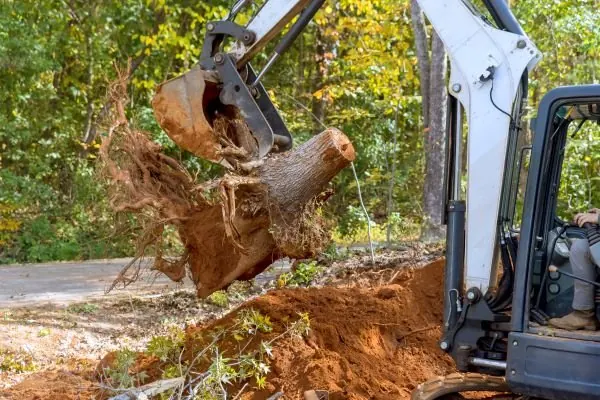
Excavator lifting a tree stump and its root plate out of red soil

What the quote should cover

  1. Each stump to be removed, with the root area to be excavated
  2. Machine to be used and how it reaches the stump
  3. How the hole is backfilled and compacted, and with what
  4. Where the stump, roots and spoil go, and whether they leave site
  5. Protection for nearby walls, paving, septic systems and services
  6. Who locates underground services before digging

Planning figures live on the cost page; every job is priced after a look on site.

When you need full removal, not grinding

Grinding is the right answer for most stumps under lawns and gardens. Full stump removal is the right answer when something structural is going on top or close by:

  • Concrete slabs and paving. Rotting roots leave voids that can cause cracking and sinking.
  • Shed and patio footings. A footing poured over decaying wood can move.
  • Pools. Excavation for a pool has to remove the stump and roots anyway; doing it first keeps the pool builder's job clean.
  • Retaining walls. Common on hills blocks, and they need firm ground for their footings.
  • Driveways. Especially on slopes, where a soft spot under the surface can wash out in winter.

How stumps are taken out

The method depends on the stump and the access:

  1. Excavator. The most common method. The machine digs around the root plate, cuts or snaps the main roots, then levers or lifts the stump out. Mini excavators fit through many side gates; larger machines need open access.
  2. Grind and dig. On tight or steep sites, the stump is ground down first, then the remaining roots are dug out with a smaller machine or by hand.
  3. Winching. Occasionally a stump is pulled with a winch anchored to a strong point, when a machine cannot reach.

Once the stump is out, the hole is cleared of loose wood and backfilled. For building work, the fill should be compacted in layers. If an engineer or builder has a specification for the fill, give it to the contractor before work starts.

Hills ground makes a difference

Most of the hills sit on gravelly laterite over clay, broken by granite. That has some practical effects:

  • Roots often spread sideways along the top of the clay, so the root plate can be wide and shallow.
  • Roots wrapped around boulders sometimes cannot be pulled out without moving the rock as well.
  • Laterite gravel compacts well when backfilled properly, which is good news for slabs and paths.
  • Clay holds water in winter. A stump hole dug in July can fill with water, so dry-season scheduling is easier on the ground.

On the foothills, around Forrestfield, High Wycombe and Wattle Grove, soils tend to be sandier. Roots spread wider still, and holes need careful compaction because sand settles.

Septic systems and services

Many hills properties are not on deep sewerage and use septic tanks and leach drains. Heavy machinery must stay off them. Before any digging, request plans through Before You Dig Australia and mark the location of the septic system, irrigation lines, garden lighting and anything else you know of underground.

After the stump is gone

Check the backfilled area after the first heavy rain for any settling, and top up if needed. If you are planting rather than building, ask for the hole to be finished with good topsoil rather than spoil.

If a stump has only to disappear from a lawn, stump grinding costs less and is quicker. Both are covered on the cost page.

Other work arranged in the hills

Tree LoppingWeight and height taken off jarrah, marri and planted trees that have outgrown hills blocks, cut back to sound points rather than to stubs.
Tree RemovalDead, leaning or unwanted trees dismantled in sections and lowered on ropes, including big hardwoods above houses on sloping blocks.
Stump GrindingStumps ground out below the surface with a machine sized to the driveway, side path or slope it has to travel.
Palm Tree RemovalWashingtonia, Canary Island date and queen palms taken down or cleaned of dead fronds and seed stalks.
Bamboo RemovalRunning and clumping bamboo cut out, with the rhizome mat dug or ground so it does not return through the lawn.
FAQs

Questions people ask before they commit

What is the difference between stump grinding and stump removal?

Grinding cuts the stump down below the surface and leaves the deeper roots to rot. Removal digs or pulls out the stump and its main roots, leaving a clean hole that can be backfilled and compacted. Removal suits building work; grinding suits lawns and gardens.

How big a hole does stump removal leave?

That depends on the tree and the soil. A large eucalypt can have a broad root plate, and in clay over laterite the roots often run sideways a long way. The quote should say how the hole will be backfilled and compacted.

Do I need to locate pipes and cables first?

Yes. Before any excavation, underground services should be located. Use the free Before You Dig Australia service, and point out septic tanks, leach drains, irrigation and garden lighting cables to the contractor.

Can stumps be removed on a steep block?

Often, with smaller excavators that can work on slopes or from a level pad. Very steep or tight sites may suit a combination of grinding and hand digging instead. The contractor will tell you what is realistic after seeing the site.

What happens to the stump once it is out?

Large stumps are heavy and awkward, especially jarrah and marri with soil and gravel caught in the roots. They are usually loaded out and taken away, which should be itemised on the quote.

Free, no-obligation

Get your free quote today

Tell us about the tree

Tree Lopper Kalamunda Call (08) 7666 4287 Free on-site quote
Call (08) 7666 4287