Marri, the tree the hills are built around
Marri (Corymbia calophylla) is one of the defining trees of the Darling Scarp. Along with jarrah, it makes up much of the forest that once covered Lesmurdie, Gooseberry Hill, Kalamunda, Walliston and Bickley, and many hills homes were built with mature marri left standing around them. You know it by its rough, chunky grey-brown bark, its big creamy-white flowers in late summer, and its large woody "honky nuts" that black cockatoos crack open for the seeds.
Marri also bleeds. Wherever the bark is damaged, the tree pushes out kino, a dark red, sticky gum that dries to a brittle, ruby crust. A little kino on a marri is normal. A lot of it, coming from a sunken, cracked patch of bark that grows year on year, is often a sign of marri canker.
What marri canker is
Marri canker is a stem and branch disease of marri and red flowering gum (Corymbia ficifolia). According to the Department of Biodiversity, Conservation and Attractions (DBCA), it is caused by a native fungus, Quambalaria coyrecup. Spores enter the stem, usually through a wound or a crack, and infect the sapwood just under the bark.
The tree responds by producing large amounts of kino. As the infection spreads, it forms a target-like lesion: a central dead area with rings of cracked, callused bark around it as the tree tries to wall off the damage and the fungus pushes past each new layer. Over time the bark over the canker cracks and sheds, exposing dead wood beneath.
The danger is in where the canker goes. If it spreads around a limb or trunk, it can ring-bark that part of the tree, cutting off water and nutrients above it. The limb or the whole crown above the canker then dies.
A separate but related disease, marri shoot blight, caused by an introduced fungus (Quambalaria pitereka) from the east coast, affects leaves, buds, flowers and fruit. It shows as dark lesions, distorted growth and dead flowers, and in the right conditions as white spore masses. It reduces flowering and seed set but is a different problem from trunk canker.
How to recognise it
Walk around the tree and look at the trunk and main limbs. Signs of canker include:
- Heavy kino bleeding from one area, often running down the trunk in dark red streaks.
- Sunken, flattened or darker bark around the bleeding area.
- Concentric rings or ridges of callus around a central wound, like a target or a series of ripples.
- Cracked and shedding bark over the lesion, sometimes exposing grey dead wood.
- Dead limbs above a canker, with brown leaves still attached or bare twigs, while the rest of the tree is green.
- Thinning or yellowing crown on the side of the tree above the lesion.
Cankers on small branches are common and often of little concern. Cankers on the main trunk, at major forks or on big limbs over the house are the ones that matter.
Why some trees are worse than others
Research referenced by DBCA points to a link between disturbance and how badly marri is affected. Trees in fragmented, cleared or heavily altered landscapes, such as roadsides, paddock remnants and suburban blocks, tend to show more severe canker than trees in intact forest. Stress from drought, root damage during building work, soil compaction, changes in drainage and wounds from machinery all appear to make trees more susceptible.
In practical terms, for a hills block, that means:
- Trees that had their root zones dug up, filled over or driven over during house building are under more stress.
- Trees with old mechanical wounds, such as mower scars, vehicle damage or badly made pruning cuts, give spores an easy entry point.
- Long dry spells and hotter summers add stress that can tip a borderline tree into decline.
What a cankered marri means for safety
A canker does two things that matter for safety.
It kills the wood above it. If a canker girdles a limb, that limb dies. Dead marri limbs become brittle and can drop without warning, particularly on hot, still days or in strong winds.
It weakens the wood at the canker. The dead wood inside an old canker can decay, so the trunk or limb is weakest exactly where the lesion is. A large limb attached through a canker may fail at that point.
Whether that is an urgent problem depends on what is underneath. A cankered limb hanging over bush at the back of a block is a lower priority than the same limb over a carport, a bedroom roof or a children's play area.
Your options
1. Monitor
If the canker is small, on a minor limb, and nothing important is underneath, monitoring may be all that is needed. Photograph the canker from the same spot every few months. If it is growing quickly, if the crown above it is thinning, or if a big limb above it dies, it is time to act.
2. Prune out affected limbs
Where cankers are on limbs rather than the trunk, removing those limbs back to sound wood takes out the dead and dying wood and reduces the weight on weakened attachments. Cuts should go back to a branch collar or a healthy side branch, never leaving a stub. Clean, well-placed cuts give the tree the best chance to seal off the wound.
3. Reduce the tree
If the trunk is partly affected but the tree is still mostly healthy, reducing the crown can lower the load on the weakened section. This is a judgement call for someone who has looked at the tree in person.
4. Remove the tree
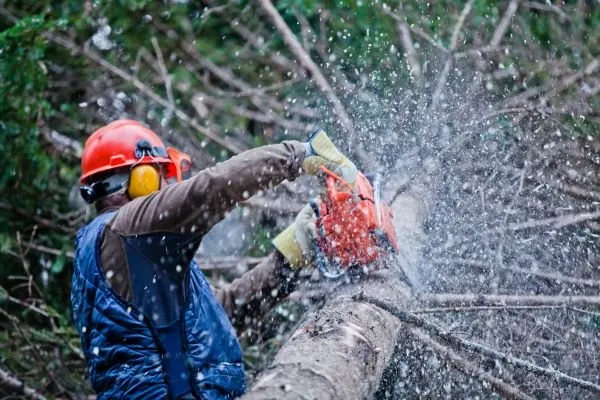
If a canker has girdled most of the main trunk, if the crown is mostly dead, or if the tree is over a house or driveway and the weakened section cannot be trusted, removal is often the safe answer. A dead or dying marri is unpredictable to climb, so removal may be done with an elevated platform, or by rigging from a neighbouring tree, rather than by climbing the affected tree.
Before removal, check whether clearing approval is needed. Marri is native vegetation, and clearing it in Western Australia is regulated. A single dangerous tree on a residential lot is often covered by an exemption, but check with the Department of Water and Environmental Regulation or the City of Kalamunda if you are unsure.
Wildlife and hollows
Old marri, including cankered ones, often have hollows. Black cockatoos, parrots, possums and bats use them, and marri nuts are a major food source for forest red-tailed black cockatoos. A dead limb can also be valuable habitat if it is not over anything that matters.
If you need to remove a cankered tree, a good contractor will check for active nests first and work around breeding where possible. In some cases, leaving a safe section of trunk as a habitat stump is an option on larger blocks.
Preventing new cankers
You cannot keep the fungus out of the hills, but you can reduce the chance of serious infection:
- Avoid wounding trees. Keep mowers, whipper snippers and vehicles away from trunks. Mulch around the base instead of mowing right up to it.
- Protect root zones during building. Fence off the area under the canopy before work starts. Avoid trenching, filling or parking machinery there.
- Prune properly. Use clean cuts at the right points. Do not leave stubs.
- Water through long dry spells, if the tree is in a garden setting and it is practical to do so. Deep, occasional watering is better than frequent light watering.
- Get advice early. A canker caught on a limb is cheaper and easier to deal with than one that has girdled the trunk.
When to call
Call to arrange an inspection if:
- a canker is on the main trunk or a major fork,
- a large limb above a canker has died,
- the tree is over a house, driveway, carport or play area, or
- you are planning building work near a marri and want to protect it.
Phones are answered Monday to Saturday from 7am to 6pm on (08) 7666 4287. For pricing, see the tree lopping cost guide, and for the removal process, see tree removal.