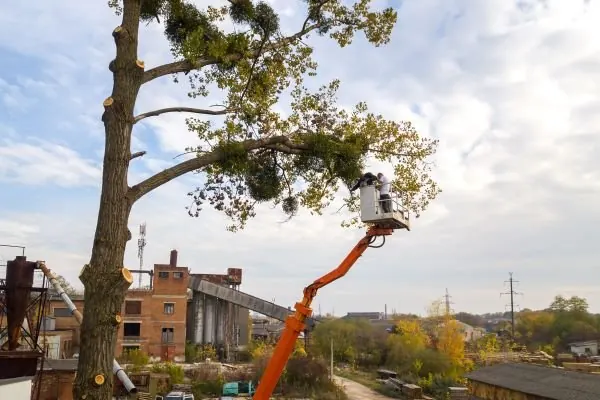
How storms hit the hills
The Perth hills take the weather a little harder than the plain below. The Darling Scarp rises a few hundred metres above the coastal plain, and when strong cold fronts come through in late autumn and winter, the ridges and upper slopes of Lesmurdie, Gooseberry Hill, Kalamunda and Walliston catch winds that funnel through valleys and over exposed ridgelines.
The tree damage pattern follows the seasons:
- The first big fronts of the season find limbs weakened over summer: dead wood, cracked forks and trees whose roots have been stressed by heat and drought.
- Saturated ground in mid-winter loosens roots in clay and laterite. A tree that would stand in a dry gale can tip when the soil is soaked.
- Summer thunderstorms, less frequent but often violent, can bring sudden downdrafts that snap limbs and topple trees with little warning.
- Hot, still days bring their own risk: eucalypts can shed large limbs without any wind at all.
The Bureau of Meteorology issues severe weather warnings for Western Australia. When a strong front is forecast, it is worth a look around the block for anything loose.
First: are people safe?
Before thinking about the tree, check:
- Is anyone hurt or trapped? Call 000.
- Is the tree or limb on or near power lines? Stay at least eight metres away, keep others back, and call Western Power on 13 13 51. Treat every fallen line as live.
- Is the house damaged and unsafe? Call the SES on 132 500 for help with storm damage to your home.
- Is a road blocked? Report trees across public roads to the City of Kalamunda or, out of hours, to the police assistance line.
Do not try to move a large tree off a roof yourself, and do not climb onto a damaged roof.
The damage to look for
Once everyone is safe, walk around the tree and look carefully. Use binoculars for high limbs.
Obvious damage
- Hung-up limbs: broken branches caught in the crown or resting on lower limbs. These can fall at any time.
- Split trunks or forks: a crack running down from a fork, often where two leaders join.
- Torn limbs: ragged stubs where a branch tore off rather than broke cleanly.
- Leaning trees: especially if the lean is new, or soil is heaved or cracked on one side.
- Exposed roots: a lifted root plate, raised soil or torn roots on the side opposite the lean.
Less obvious damage
- Cracks in limbs: fine cracks along the top or bottom of a big limb, sometimes visible only from certain angles.
- Loose bark over a crack or split.
- Fresh resin or kino bleeding from a new wound.
- A crown that has shifted, looking different against the sky to how it did before.
- Broken roots under the surface, sometimes shown by cracks in paving or a sudden gap at the base of the trunk.
Species that tend to suffer
Jarrah and marri. Big, heavy limbs and wide crowns make them prone to losing limbs in high winds, especially where old wounds, canker or decay have weakened a fork. See our marri canker guide.
Pines. Planted radiata and other pines on older hills blocks are often shallow-rooted in rocky ground and can topple whole in saturated soil.
Trees killed by dieback. Dead jarrah and banksias become brittle and shed limbs and tops readily. Our dieback guide explains the signs.
Trees with past bad pruning. Regrowth from old lopping cuts is weakly attached and can snap off in wind.
Trees near recent earthworks. Cut roots from driveway, pool or retaining wall works can leave a tree unstable for years.
How a hung-up or damaged tree is made safe
A storm-damaged tree is more dangerous to work on than a healthy one. Broken wood is under tension and compression in ways that are hard to predict. The usual approach:
- Assess from the ground. The contractor works out where the loads are, what is holding what, and where pieces will go when cut.
- Secure before cutting. Hung-up limbs are rigged with ropes so they can be lowered under control instead of dropping.
- Relieve tension in stages. Small cuts release tension gradually rather than one cut letting everything go.
- Use machines where possible. An elevated work platform or crane can reach damaged wood without a climber having to go into a weakened tree.
- Clear the site. Branches chipped, wood cut and stacked or removed.
- Make clean cuts on what remains. Torn stubs are cut back to proper points so the tree can seal over.
The contractor will tell you if the remaining tree is worth keeping or whether removal is the safer option.
Insurance and paperwork
If you are claiming:
- photograph everything before any work, from several angles, including damage to buildings, fences and cars,
- keep the quote and invoice, itemised so the insurer can see what was done,
- ask the insurer whether they want their own assessor to see it before the tree is cleared, unless it is unsafe to wait,
- note the date and weather, for example a Bureau of Meteorology warning on the day.
Living with a damaged tree for a while
Sometimes a damaged tree cannot be dealt with straight away, because contractors are busy after a big front or because the insurer wants to inspect first. In the meantime:
- Fence off the drop zone. Keep people, pets and cars out from under hung-up or cracked limbs, at least as far out as the limb could reach if it fell.
- Do not park under it. Move cars, trailers and caravans, even if that means parking on the street.
- Watch for change. A widening crack, a lean that gets worse, fresh soil heave at the base or new creaking in wind are signs to call again and say it is getting worse.
- Avoid pulling on it. Do not tie ropes to a damaged tree or try to winch it upright.
- Keep gutters and drains clear of broken twigs and leaves so water can still escape from the roof.
After the storm: prevention
The best time to deal with storm risk is before the storm. Each autumn, ahead of the winter fronts, consider:
- Deadwooding big gums over the house, driveway and play areas.
- Crown reduction or thinning on trees with heavy, overextended limbs.
- Checking forks where two leaders join for cracks and included bark.
- Removing dead trees before they drop pieces.
- Clearing gutters of leaf litter, which also helps in bushfire season.
In bushfire prone parts of the hills, the same work often helps meet the City of Kalamunda's annual fire hazard reduction requirements. See tree lopping for how that is done.
When to call
Call as soon as people are safe and any power line hazard has been reported. Phones are answered Monday to Saturday from 7am to 6pm on (08) 7666 4287. Tell us what has happened, whether anything is on a building or vehicle, and send photos if you can. For budget figures, see the cost guide.